Regio VI, Insula 12 — House of the Faun
HAVE
Welcome. The word is laid in mosaic on the doorstep of the city's grandest house, where it has greeted visitors for two thousand one hundred years. It still does.
Pompeii is a Roman town stopped on an afternoon in 79 AD and kept, under ash, until 1748. This site walks its streets: the history, the two days of the eruption, what survives, and how to visit.
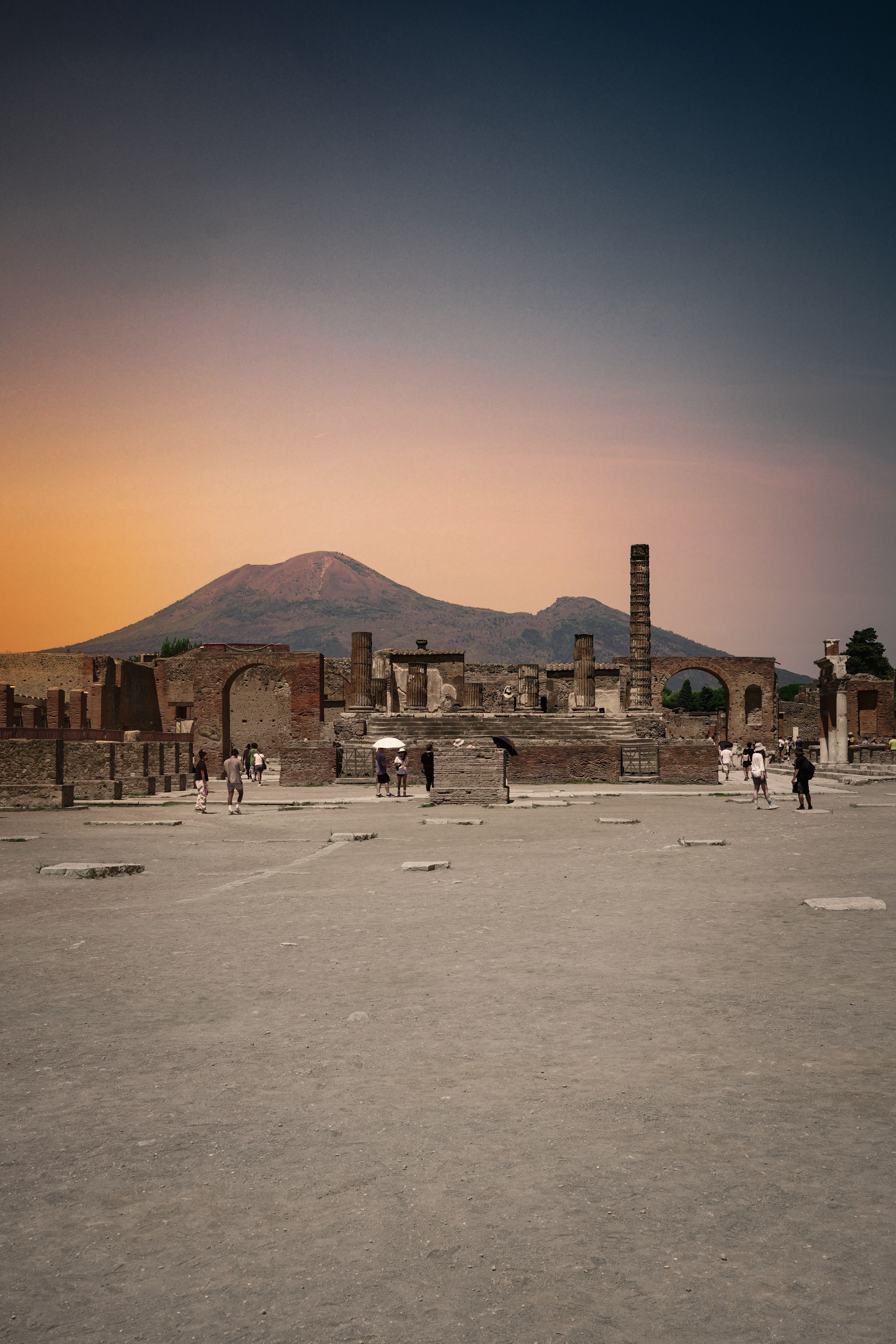
- Object
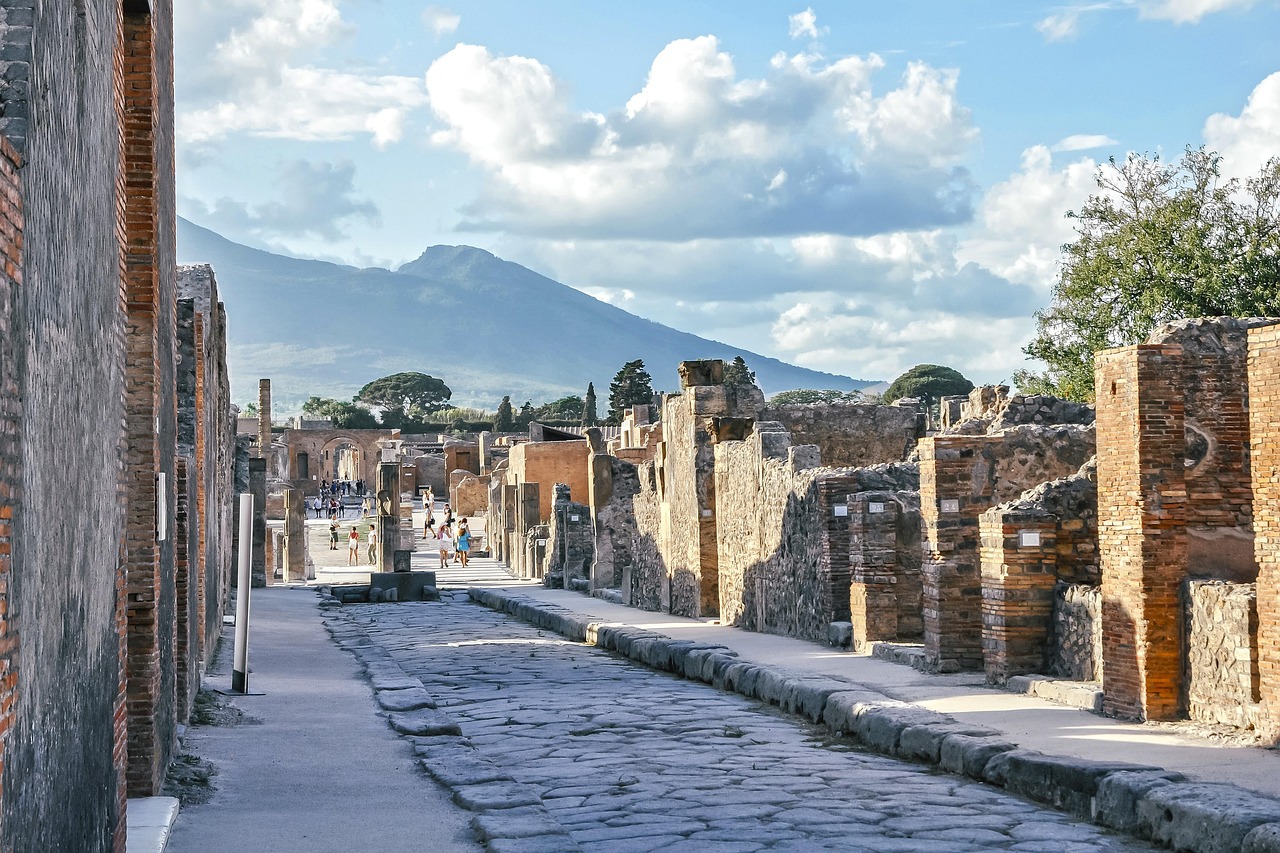
- The Forum at dusk, Vesuvius behind
- Date
- Forum paved 2nd century BC · photograph, present day
- Findspot
- Pompeii, Regio VII
- Credit
- Nirjhar Basak, Pexels
I
History
A prosperous town of perhaps eleven thousand people, in the shadow of a mountain nobody feared.
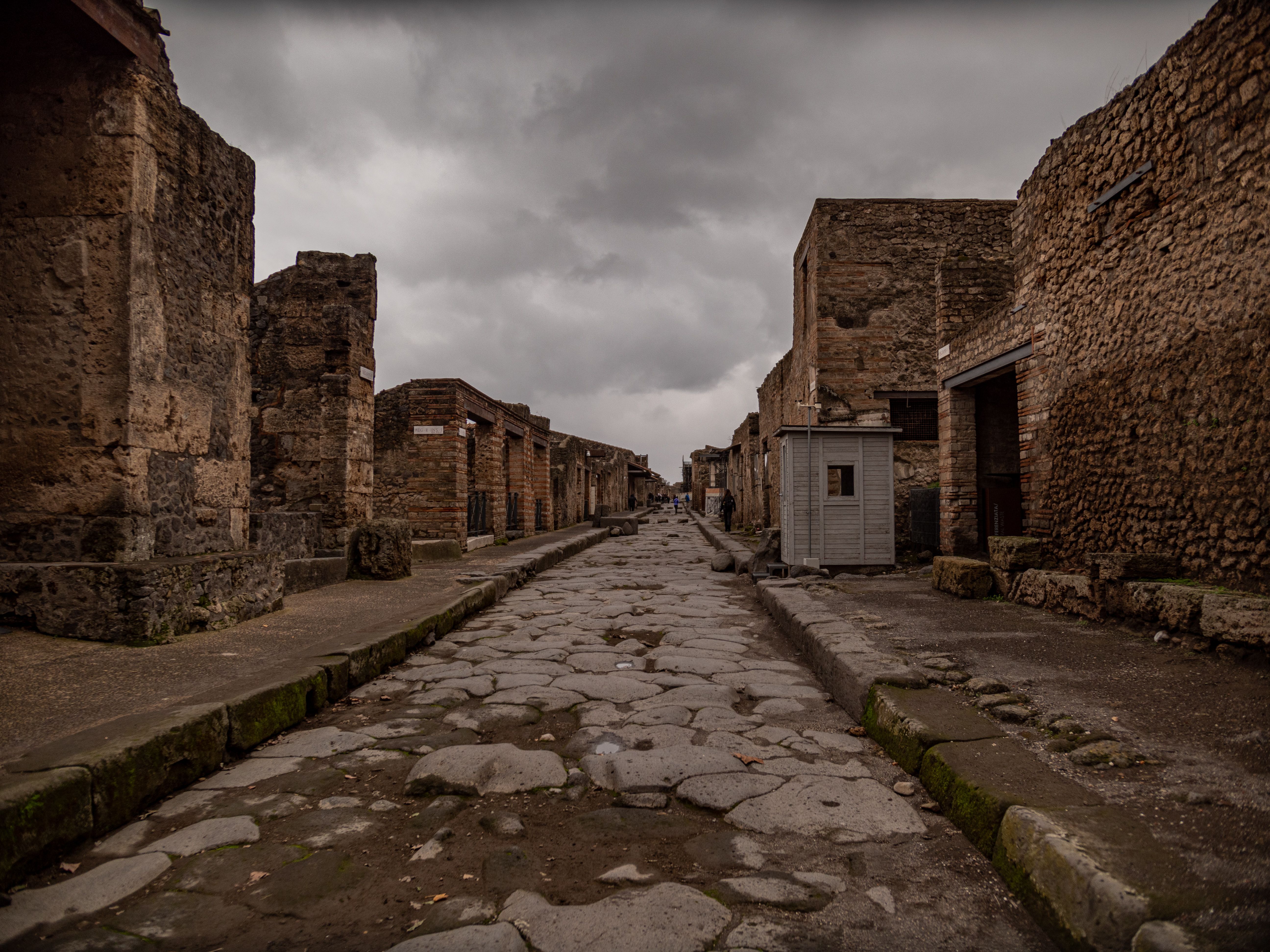
By the first century AD, Pompeii was a Roman town of perhaps 10,000 to 12,000 people, near the Bay of Naples and the mouth of the Sarno River. Founded by the Oscans in the seventh or sixth century BC and shaped by Greek and Samnite settlers, it became a Roman colony in 80 BC. Its streets followed a roughly regular grid, worn into deep ruts by cart traffic, and were lined with bakeries, laundries, workshops and thermopolia selling prepared food and drink over the counter.
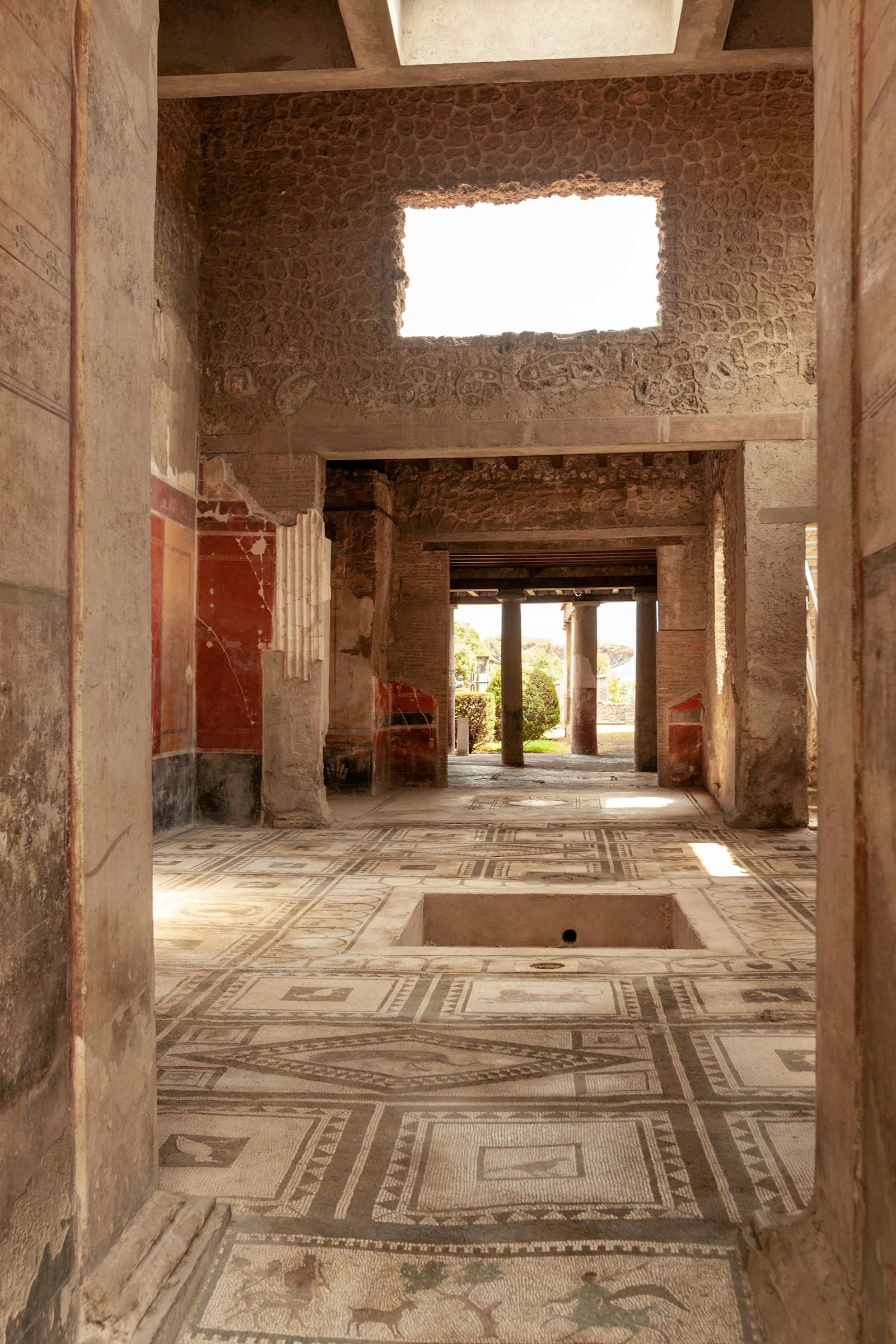
Wealthier residents lived in houses and villas arranged around open courtyards, gardens and atria painted with elaborate frescoes. Poorer inhabitants often lived in smaller rooms above or behind the shops. The walls carried graffiti ranging from election notices and advertisements to insults, love messages and everyday observations. The city had a forum, theatres, an amphitheatre and several public baths.
Mount Vesuvius dominated the landscape, but the volcano had been dormant for centuries, and its long inactivity may have left residents unaware that it was capable of a major eruption. In 62 AD a severe earthquake damaged the town. Repairs were still underway seventeen years later, when the mountain woke.
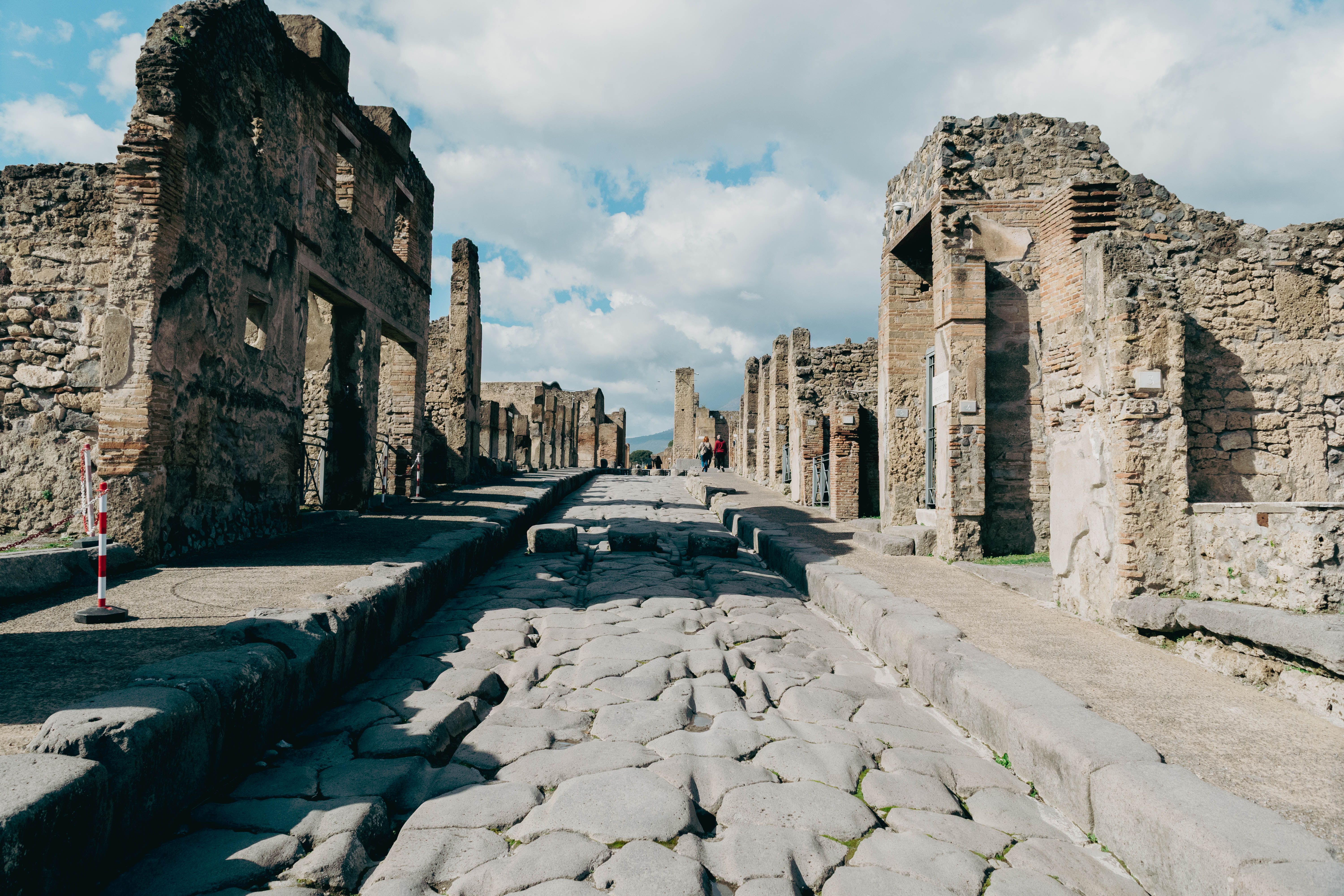
- Object
- Street with cart ruts and raised pavements
- Date
- Paving 2nd–1st century BC
- Findspot
- Pompeii
- Credit
- Balázs Gábor, Pexels
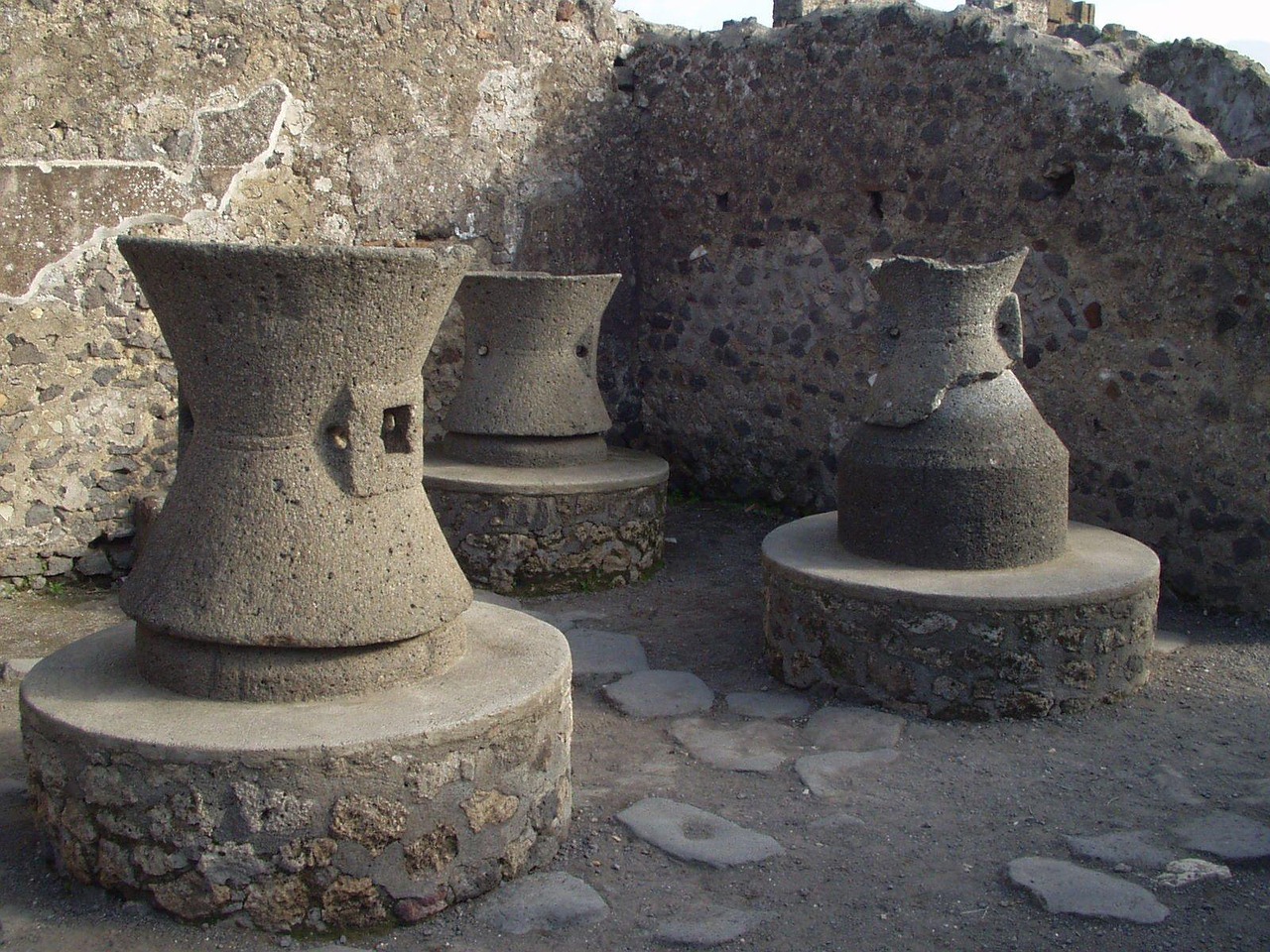
- Object
- Lava-stone mills and oven of a bakery
- Date
- 1st century AD
- Findspot
- Pompeii, one of some thirty bakeries
- Credit
- Simon, Pixabay
79 AD
Year Vesuvius erupted
~11,000
Residents at its height
1748
Systematic excavation begins
44 ha
Uncovered to date, of about 66
7th–6th century BC
Founded near the Sarno river by the Oscans, later shaped by Greek and Samnite settlers.
80 BC
Becomes a Roman colony. The forum, baths and amphitheatre take their final shape.
62 AD
A severe earthquake rattles the region. Repairs are still underway seventeen years later.
79 AD
Vesuvius erupts, traditionally on 24 August. Within two days Pompeii lies under metres of ash and pumice.
1748
Systematic excavation begins under Charles of Bourbon, and the city resurfaces.
II
The eruption
Two days, written down by Pliny the Younger from across the bay and recorded in the ground at Pompeii.
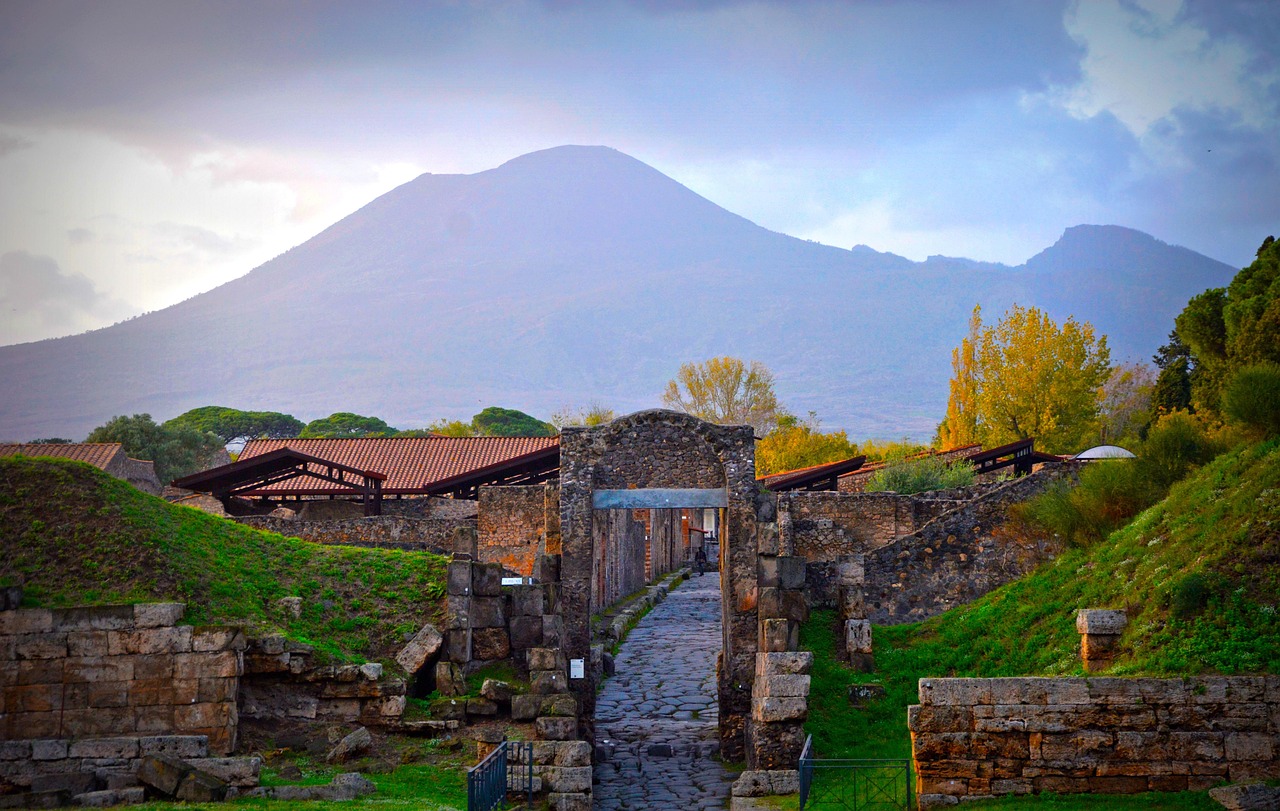
- Object
- Vesuvius from the excavations
- Credit
- yorick77
24 August · early afternoon
The column rises
Ash, gas and pumice climb some thirty kilometres and spread at the top. The wind carries the cloud south-east, over Pompeii. The date is the traditional one; some scholars argue for October.
“Its general appearance can best be expressed as being like an umbrella pine, for it rose to a great height on a sort of trunk and then split off into branches.”
24 August · afternoon and evening
Pumice falls
Light stones rain down at ten to fifteen centimetres an hour. The sky goes dark in the middle of the day. Most of the town leaves while the streets can still be walked, carrying what they can.
“Ashes were already falling, not as yet very thick. I looked back: a dense black cloud was coming up behind us.”
24 August · night
Roofs give way
The fall turns grey and heavier. Flat roofs, loaded with more than a metre of stone, begin to collapse. Those who stayed shelter in ground-floor rooms, or climb out through upper windows onto the new surface.
“Darkness fell, not the dark of a moonless or cloudy night, but as if the lamp had been put out in a closed room.”
25 August · about half past six
The column collapses
The eruption can no longer hold up its own weight. Avalanches of hot gas and ash race down the mountain at the speed of a car. The first reach the north wall of the town and stop there. The next do not.
25 August · around eight
The city is sealed
The last surges cross the whole town at several hundred degrees. Everyone still inside dies within moments. Fine ash settles so closely around them that it keeps their shape after the bodies are gone. More than a thousand have been found so far.
Hours follow Pliny's two letters and the volcanological reconstruction by Sigurdsson and others. Deposits across the city reach four to six metres.
III
What remains
Three places to start, and a walk through the rest.
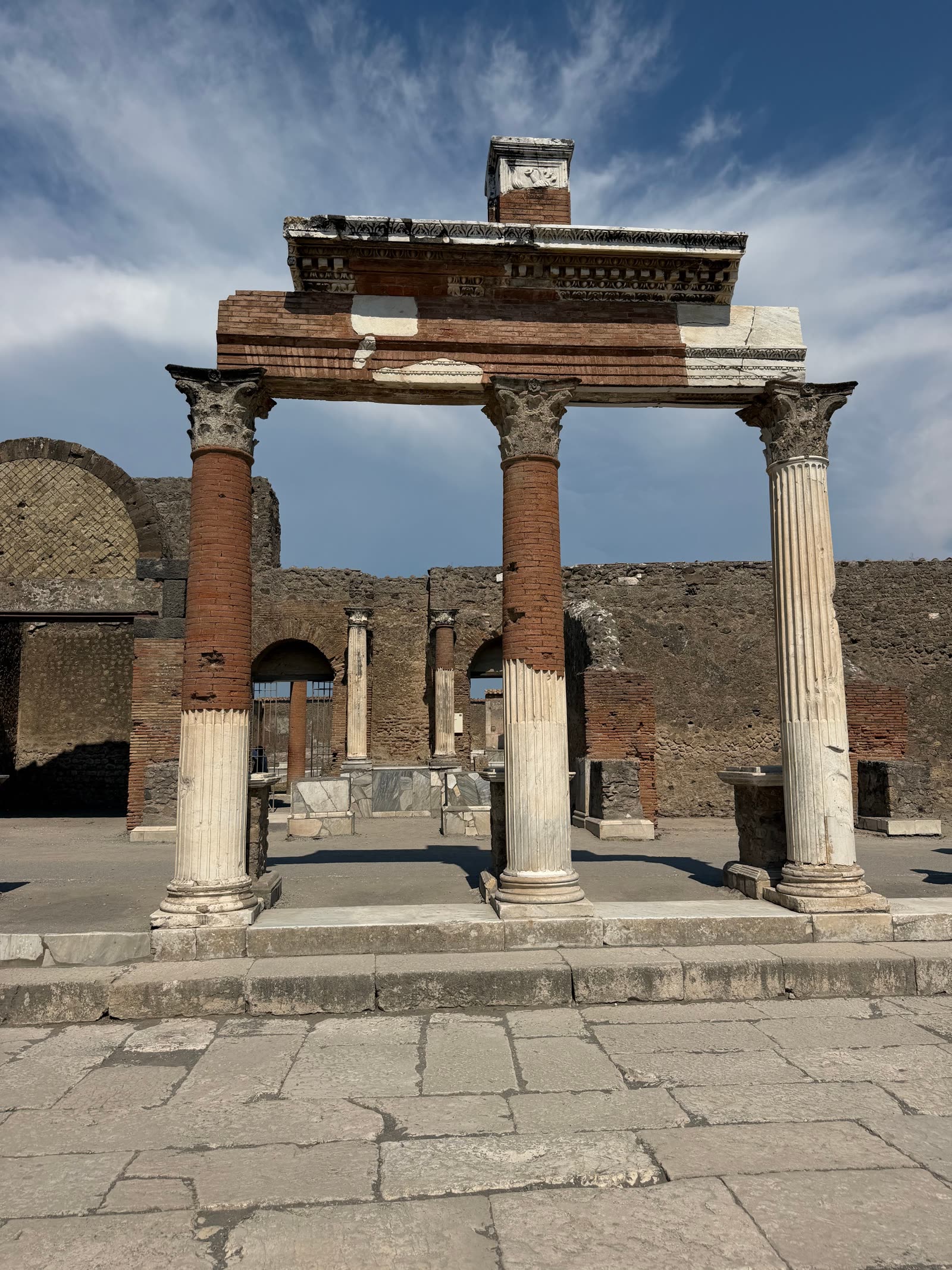
- Object
- The Forum, civic and religious centre
- Date
- Laid out 2nd century BC
- Findspot
- Regio VII
- Credit
- Kiki K, Pexels
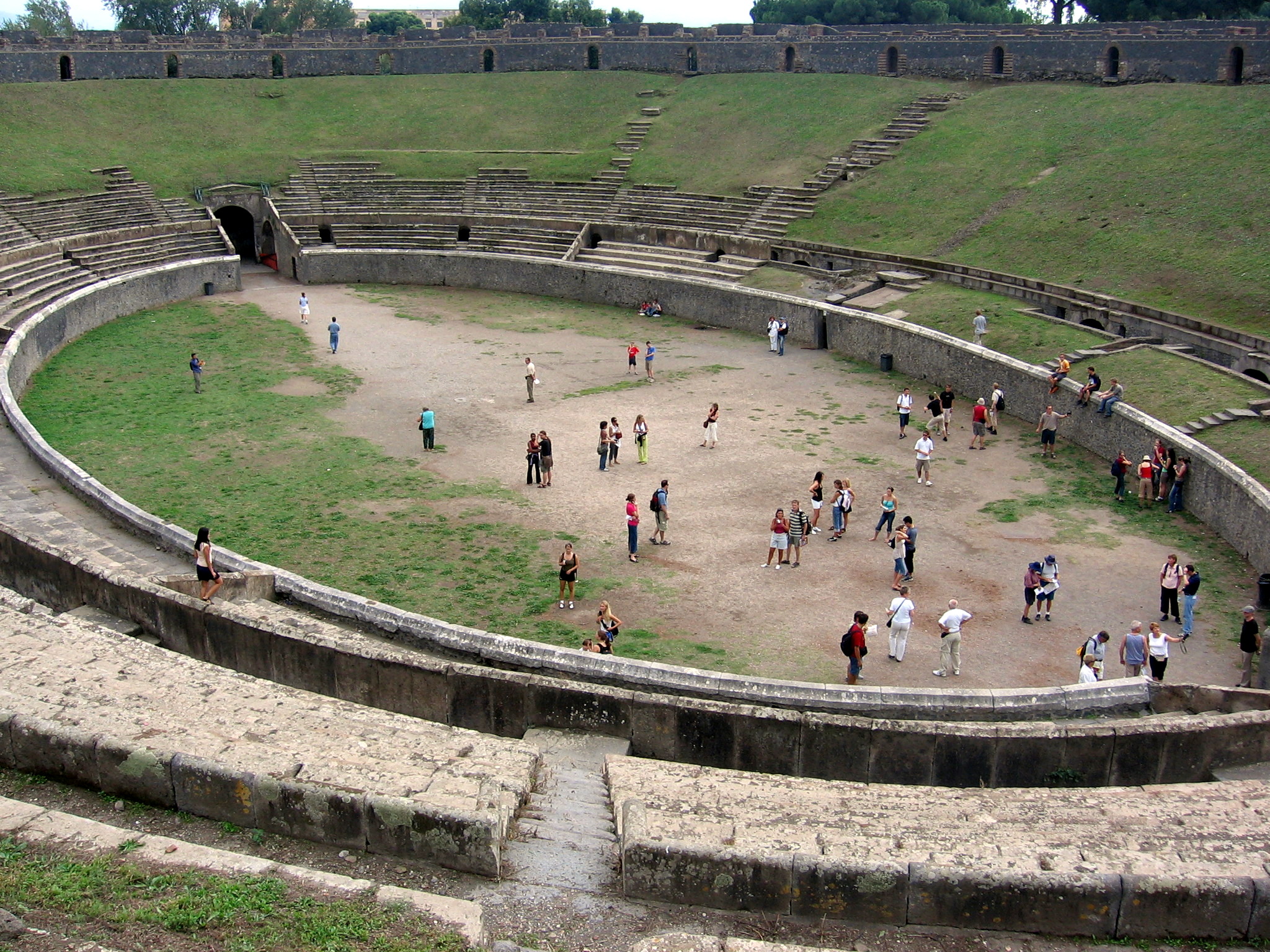
- Object
- The Amphitheatre, seating about 20,000
- Date
- About 70 BC, the oldest known in stone
- Findspot
- Regio II
- Credit
- Wikimedia Commons, CC BY-SA
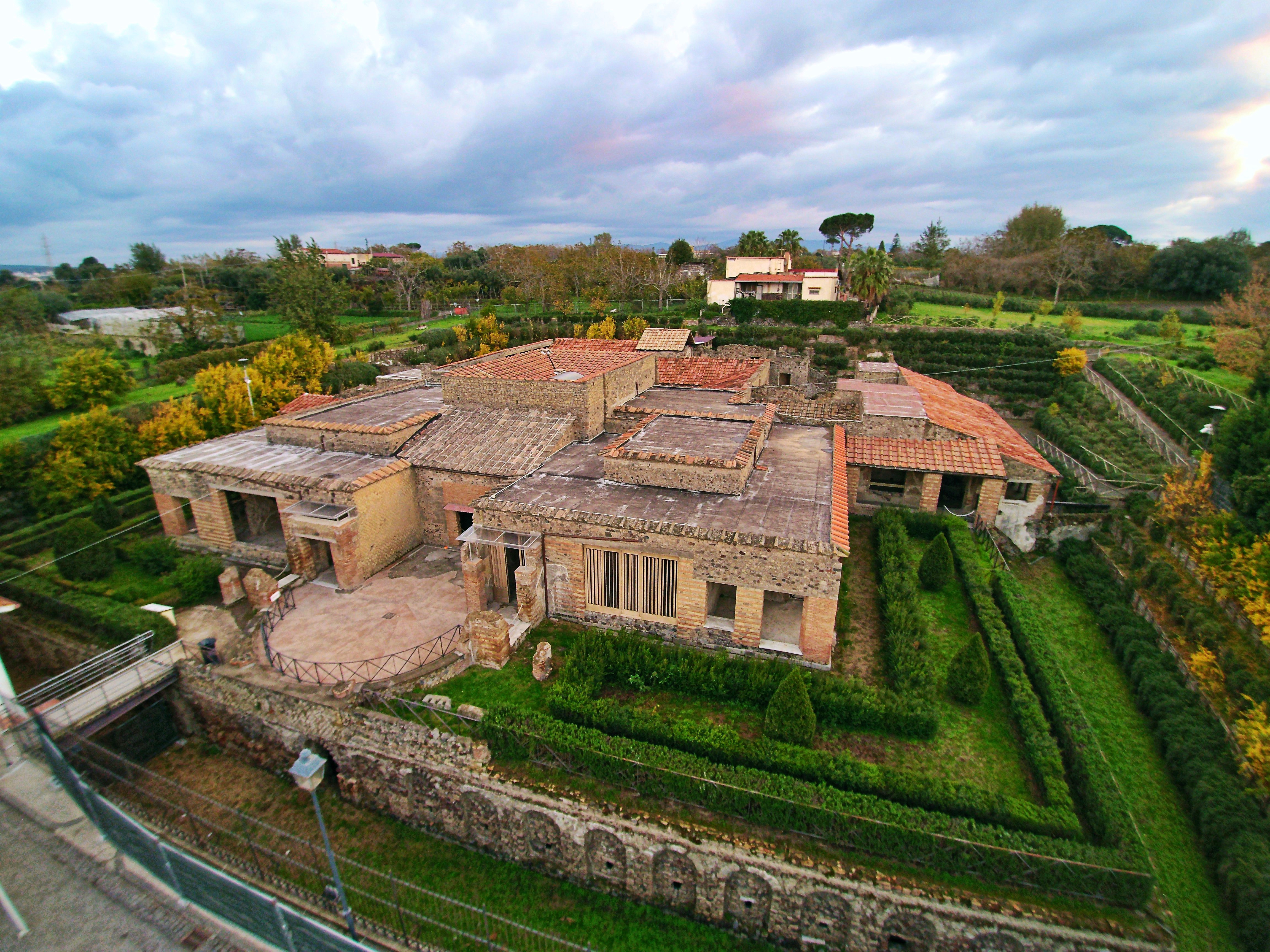
- Object
- Villa of the Mysteries, with its frescoed hall
- Date
- 2nd century BC, frescoes about 60 BC
- Findspot
- Outside the Herculaneum Gate
- Credit
- ElfQrin, CC BY-SA 4.0
A walk through the ruins
Select a photograph to see it large.
Thermopolium counter · Valentin Lacoste Garden fresco · Alex Revilla Fourth Style wall · Jiří Dočkal Room with red walls · Alexandra_Koch Atrium and impluvium · Yaopey Yong The Forum, north end · Cole Ciarlello Centaur on the Forum · Mahdiye JV The Odeon · Cole Ciarlello Via dell'Abbondanza · Bogdan Giurca Street toward Vesuvius · DUOTONE_ Vesuvius over the gate · yorick77 Bakery mills · Simon Cast in the granary · Christopher Ott Painted vessel · pcdazero
IV
Visiting today
On the Bay of Naples, below Vesuvius, roughly 8 km south-east of Naples.
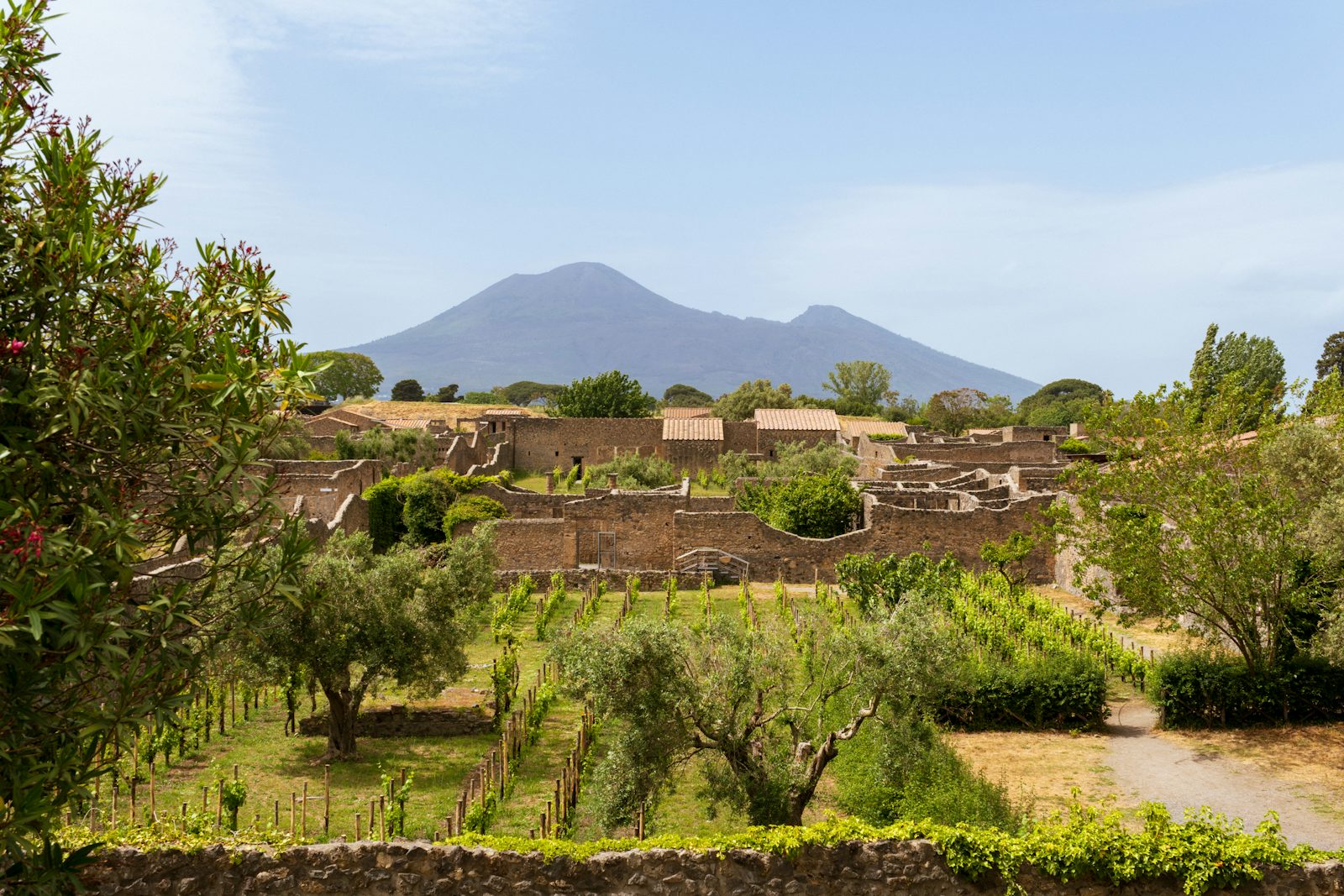
- Object
- The excavations, looking north to Vesuvius
- Findspot
- Pompei, Campania, Italy
- Credit
- Filip Chmielecki, Unsplash
Hours
Open daily except 25 December and 1 January. Closes earlier in winter, later in summer. Check the official site before you go.
Getting there
The Circumvesuviana train from Naples stops at Pompei Scavi–Villa dei Misteri, steps from the entrance.
Tickets
Book ahead in peak season. A combined ticket also covers nearby Herculaneum.
Plan for
At least half a day. The excavated site covers 44 hectares, so wear sturdy shoes and bring water and sun protection.
Buried by disaster.Preserved by it, too.
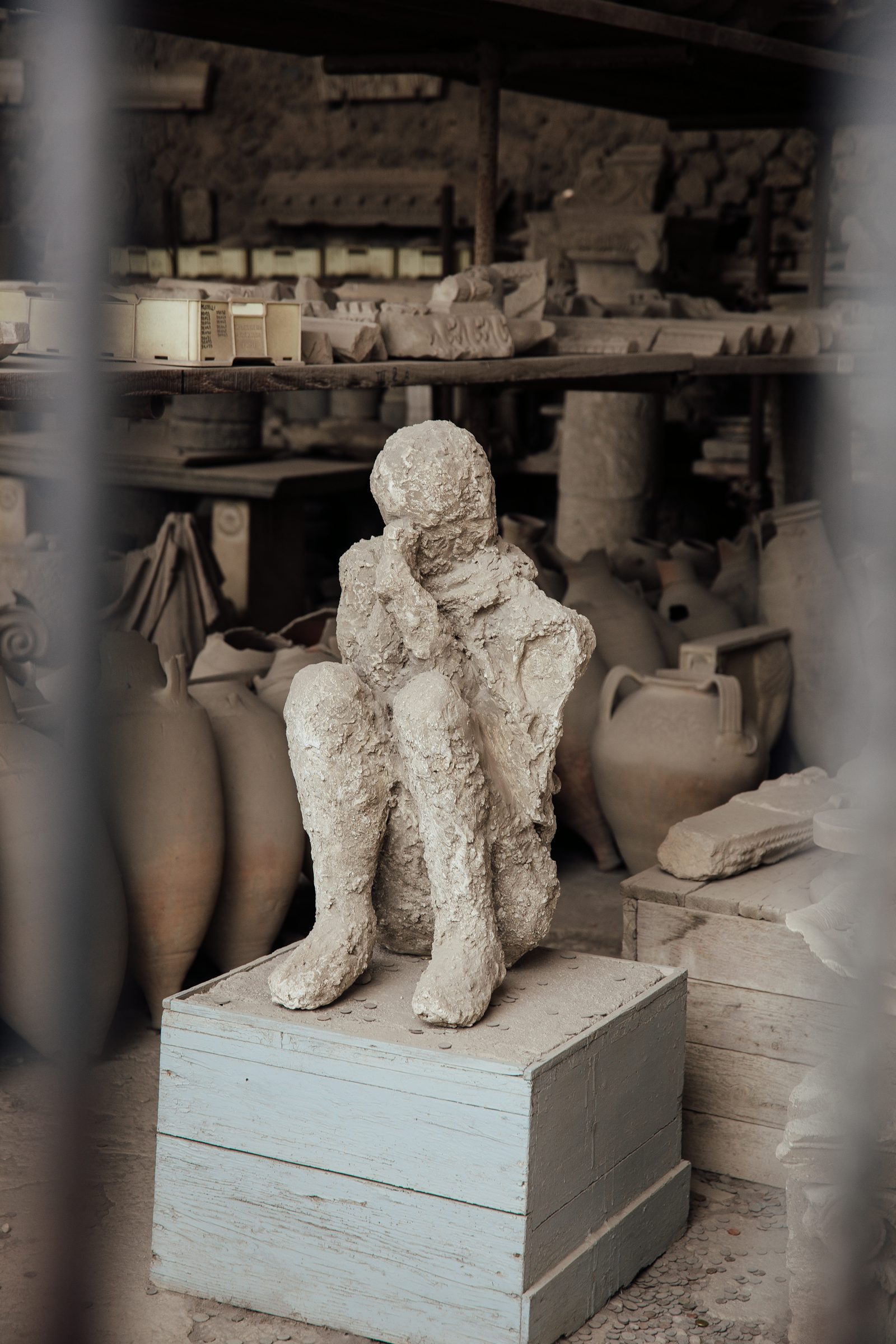
The ash kept the shape of everything it covered: a loaf of bread, a door, a dog, a person. From 1863 Giuseppe Fiorelli poured plaster into the cavities as excavators reached them. The casts are the people of Pompeii at the last moment of 25 August.
- Object
- Plaster cast of a victim, Fiorelli method
- Date
- Death 79 AD · cast after 1863
- Findspot
- Pompeii
- Credit
- PlanetPompeii